
Vasectomy Reversal vs IVF: Understand Your Fertility Options After a Vasectomy
Deciding to expand your family after a vasectomy is a significant step. For many couples, it raises an immediate question: what are the options, and how do you choose between them? This article outlines the two main pathways: vasectomy reversal and IVF with surgical sperm retrieval. Ultimately, to help you and your partner approach the conversation with your treating team from a well-informed position.
What Are Your Options After a Vasectomy?
When a couple decides they want to conceive after a vasectomy, there are two established clinical pathways: vasectomy reversal (also called vasovasostomy or vasoepididymostomy, depending on the anatomy involved), and in vitro fertilisation (IVF) using surgically retrieved sperm.
Both pathways can lead to pregnancy, but they work quite differently, involve different clinical teams, carry different costs, and suit different circumstances. There is no universal answer. The right pathway depends on a combination of medical, logistical, and personal factors that are best explored through individual assessment with a specialist.
What’s important to understand from the outset is that these two options are not always in competition. For some couples, vasectomy reversal is the clear starting point. For others, IVF is the more appropriate first consideration. And for some, a discussion of both pathways including which to pursue first and in what order is exactly where the conversation needs to begin.
How a Vasectomy Reversal Works
Vasectomy reversal is a microsurgical procedure that reconnects the vas deferens (the tube through which sperm travel) that was divided or blocked during the original vasectomy. When successful, it restores the natural flow of sperm through the reproductive tract, allowing for the possibility of natural conception over time.
The procedure is performed under general anaesthesia and typically takes between two and four hours, depending on the complexity of the anatomy involved. Two techniques may be used: a vasovasostomy, which rejoins the vas deferens directly, or a vasoepididymostomy, which connects the vas deferens to the epididymis when blockage has occurred higher in the duct system. The appropriate technique is determined during the procedure itself, based on what is found at the time of surgery.
Recovery generally involves a period of rest and restricted activity, with most men returning to desk-based work within a week or so, and more physically demanding roles taking a little longer.
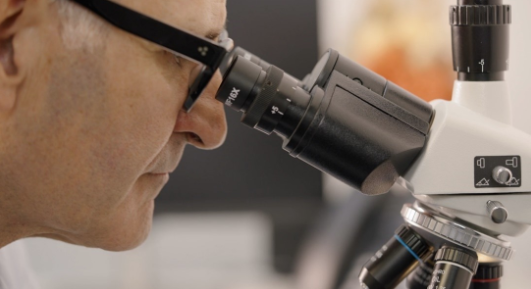
At Metrocentre, a vasectomy reversal is performed by Dr. Chris Lekich using high-magnification microsurgical technique. Vasectomy reversal is a technically complex microsurgical procedure that requires specific training and experience in microsurgery. It is worth noting that vasectomy reversal is microsurgery in the true sense of the word; this is distinct from vasectomy itself, which is not a microsurgical procedure.
Sperm may appear in a post-operative semen analysis within a few months, though the timeline varies between individuals. Ongoing monitoring through semen analyses is a standard part of follow-up care.
How IVF Works After a Vasectomy
IVF using surgically retrieved sperm is the other primary pathway for couples seeking to conceive after vasectomy. In this approach, sperm are obtained directly from the testicle or epididymis through a minor surgical procedure and used in conjunction with IVF or intracytoplasmic sperm injection (ICSI) to fertilise eggs retrieved from the female partner.
The IVF process itself is managed through a fertility clinic and involves hormonal stimulation of the female partner’s ovaries, egg retrieval, fertilisation in a laboratory setting, and embryo transfer. This is a significant undertaking for both partners, particularly for the female partner, whose treatment involves multiple clinic appointments, daily hormone injections, and an egg retrieval procedure under sedation.
IVF with surgically retrieved sperm bypasses the need to restore sperm flow through the vas deferens, which can make it a relevant consideration in certain clinical situations. However, it is important to understand that IVF is not a simpler or less invasive alternative overall as it involves a different kind of complexity, a different timeline, and different implications for both partners.
The involvement of a fertility clinic, reproductive endocrinologist, and laboratory team means that IVF requires coordination across multiple healthcare providers. Cost, cycle planning, and the female partner’s reproductive health are all integral parts of this pathway.
Factors That May Influence Decision-Making
Several clinical and personal factors are worth considering when thinking about which pathway may be more appropriate for a given couple. These are discussed in detail during a specialist consultation, but they include:
Time Since Vasectomy:
The interval between the original vasectomy and any attempt at reversal is a relevant consideration in how anatomy may have changed over time. This is something a microsurgeon can assess as part of a thorough pre-operative evaluation.
Female Partner's Age and Reproductive Health:
The female partner’s age and ovarian reserve are important factors in any fertility pathway, but particularly so when timing and the number of potential treatment cycles are relevant.
Anatomy and Findings At The Time Of Surgery:
For vasectomy reversal, what is found during the procedure which includes the presence or absence of sperm in the vas fluid at the time of surgery guides the technique used. This cannot always be predicted before the operation begins.
Previous Pregnancies and Fertility History:
Whether either partner has children from a previous relationship, and any known fertility factors on either side, can inform the approach.
Personal and Logistical Considerations
The level of involvement required from each partner, the timeline to conception, and individual values around natural conception versus assisted reproduction are all valid parts of the conversation.
None of these factors should be interpreted as a barrier or a green light in isolation. They are pieces of a larger clinical picture that a specialist team is best placed to assess together.
Cost Considerations
It is worth understanding, at a general level, that the cost structures of these two pathways differ considerably.
Vasectomy reversal is a single surgical procedure. There are associated costs such as, surgeon fees, anaesthetic fees, hospital or procedure room fees, but the expense is largely contained to that episode of care, along with post-operative follow-up and semen analysis monitoring.
IVF, by contrast, involves multiple components across multiple providers: the sperm retrieval procedure, the fertility clinic’s cycle management fees, laboratory costs, and the cost of the IVF or ICSI cycle itself. If more than one cycle is required, costs accumulate. Medicare provides some rebates for fertility treatment in eligible circumstances, and it is worth discussing the specifics of your situation with both a specialist and your fertility clinic.
The relative costs and suitability of vasectomy reversal and IVF vary depending on individual clinical circumstances, fertility factors, and the number of treatment cycles required.
These are general considerations only. Detailed cost information should be sought directly from the treating teams involved in your care.
Why Individual Assessment Matters
No article, however thorough, can substitute for a consultation with a specialist who can review your specific circumstances, examine the relevant anatomy, and discuss your goals as a couple.
Vasectomy reversal and IVF are not interchangeable options, and the decision between them is not simply a matter of personal preference. It involves clinical variables that can only be properly assessed through direct examination and a detailed medical history. In some cases, a conversation between a microsurgeon and a fertility specialist is the most useful starting point.
At Metrocentre, our doctors take the time to understand each patient’s situation fully before any pathway is recommended. The consultation process is designed to give you clear, clinically grounded information so that whatever decision you make, you make it with confidence.
If you are considering your options after a vasectomy, we encourage you to book a consultation and begin the conversation.
This information is general in nature and does not constitute medical advice. Treatment suitability varies between individuals and should be discussed with an appropriately qualified health practitioner.